
[Toronto Star Feature] A Program Geared Towards Fight Back Against Parkinson’s
Posted onThis Toronto man was diagnosed with Parkinson’s. How a surprising routine is helping him fight back
Mike Loghrin was diagnosed with Parkinson’s disease 12 years ago and said that after his sessions at Kingsway Boxing, which he started in January, he feels “energized.”Lance McMillan/Toronto StarView Original Article via The Star | By Daysha Loppie Staff Reporter | Visual Content: Lance McMillan/Toronto Star
People with Parkinson’s are finding strength, energy and connection at this Etobicoke boxing club’s specialized program that began in January.
Mike Loghrin’s grey hair is plastered to his forehead with sweat, as he sports a navy blue T-shirt that reads “It’s so weird being the same age as old people.” He picks up the thick black battle ropes anchored to the gym wall, each weighing about 22 kilograms, and for 15 amazing seconds, he lifts and slams them in rhythmic waves against the floor.
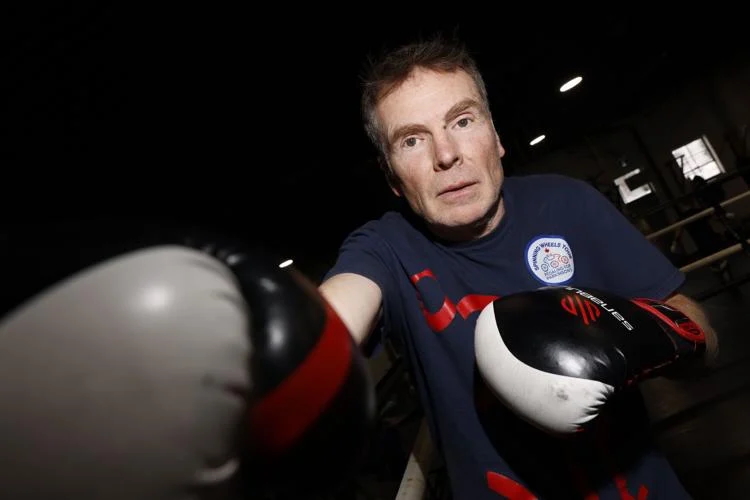
Twelve years ago, Loghrin was diagnosed with Parkinson’s disease, a neurodegenerative disorder that affects movement, co-ordination and balance. Now 63, he’s been boxing for a decade. When his friend Lloyd Taylor told him about a new specialized program for people with Parkinson’s at Kingsway Boxing Club in Etobicoke that started in January, he jumped at the chance to join.
Loghrin said Parkinson’s affects more than just the body.
“Another part you don’t notice as much with Parkinson’s is the fight we have inside our heads, too — the anxiety,” he said.
He travels twice a week from Scarborough for the StrikeBack Boxing and Strength program at Kingsway. He said the sessions ease his physical and cognitive symptoms, as well as the feeling of isolation that often comes with Parkinson’s because he gets to meet others with the condition.
“Physical activity is truly one of the best ways we can deal with Parkinson’s,” he said. “We can get medication from our doctors, and then you’ve got to get into a gym or whatever keeps you moving. You need that.”
Jennifer Huggins, the club’s owner and creator of the program, said the isometric exercises — holding a muscle without moving the joint — help build strength and stability to support everyday movement.
The Kingsway Boxing Club StrikeBack Program runs every Tuesday and Thursday from 10:00–11:30 AM in Toronto’s West End. Open to all ages and ability levels, with flexible options ranging from single drop-ins to monthly memberships.
What research says about exercise and Parkinson’s
Recent Canadian research highlights the importance of early intervention and exercise alongside medical care for people with Parkinson’s.
“The best exercise is the one that you actually do, that you do consistently.” said Dr. Eliza Freitas, a neurologist at Baycrest Hospital, specializing in movement disorders like Parkinson’s. “Consistency is the one variable that matters long term.”
Freitas said specialized boxing programs have been around for a while across the GTA. Boxing incorporates cardio and aerobic exercises, which studies have shown can slow disease progression by reducing inflammation in the brain triggered by Parkinson’s. People with Parkinson’s do non-contact boxing, using pad work and bag work under supervision, with no sparring or head contact.
“It’s very important to start exercising as soon as you have the diagnosis,” said Freitas.
More than 110,000 Canadians are living with Parkinson’s, a number expected to rise to about 150,000 by 2034, according to Parkinson’s Canada.
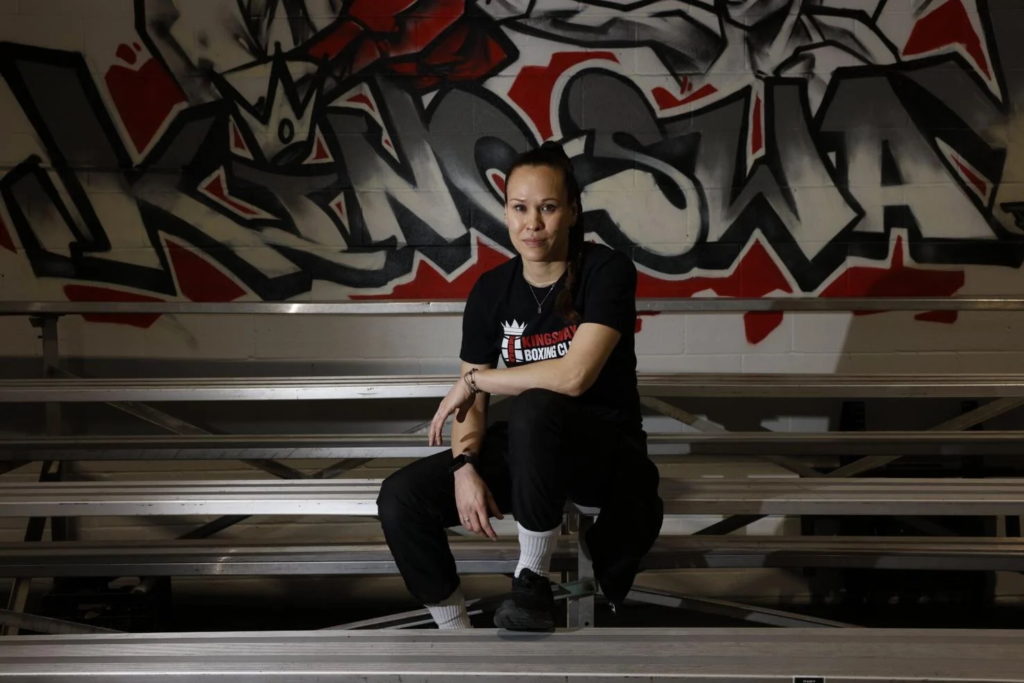
“I lost my grandfather to Parkinson’s,” said Huggins. He was diagnosed with the disease after head trauma from a motorcycle accident. Huggins never got to meet her grandfather before he died.
Research shows that in Canadian African and Caribbean communities, health challenges are sometimes kept private to protect family reputation and show strength.
“Parkinson’s should be something we are very aware of, educated about and know what to do,” said Huggins. That belief prompted her to start the program after people asked for it.
What a training session looks like
Huggins first started her gym above a hair salon in Etobicoke’s Royal York area 20 years ago. It has moved several times and along the way has attracted many participants with Parkinson’s, like Lloyd Taylor.
“I met him 15 years ago and he was just coming to us for the sport of boxing,” said Huggins.
Taylor now participates in StrikeBack. “It’s only a few weeks old, but already people are signing up,” he said.
On Tuesday and Thursday mornings, sessions, led by Huggins with support from Patricia Else and Rob Gorican, begin with power moves. Then they move into conditioning like planks, burpees and battle ropes, and then some weight work.
“Then we put the gloves on, which is the exciting part,” said Taylor.
“You’re dripping with sweat, you are getting a great physical workout. But the mind is working the whole time.”
When Taylor was diagnosed five years ago, he said he and his wife, Jane, agreed not to tell anyone. “Thankfully, my wife can’t keep a secret.”
The Kingsway Boxing Club StrikeBack Program runs every Tuesday and Thursday from 10:00–11:30 AM in Toronto’s West End. Open to all ages and ability levels, with flexible options ranging from single drop-ins to monthly memberships.